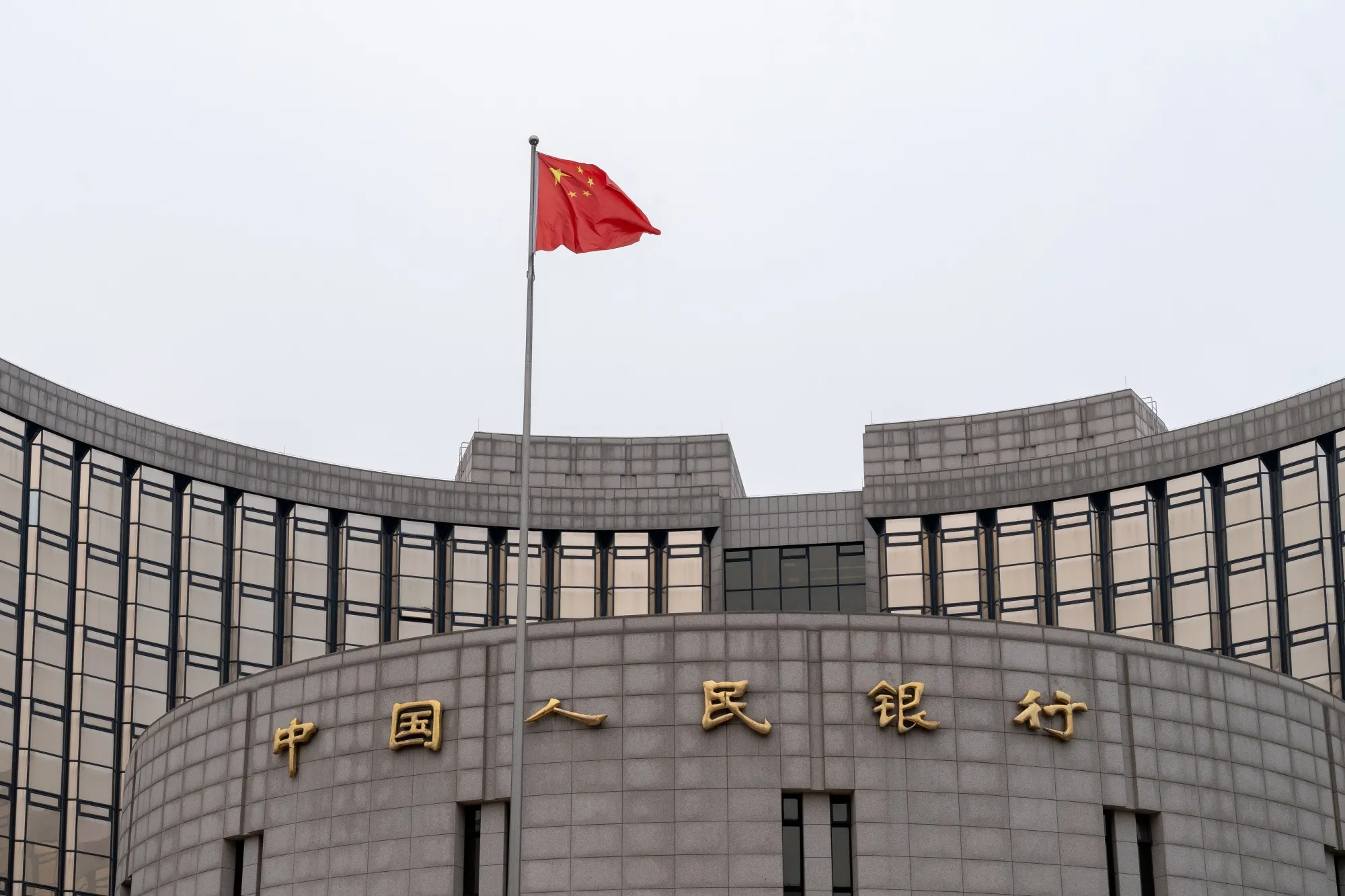
Key Takeaways Before You Keep Reading
- ✓ China's Ministry of Finance is issuing roughly 300 billion yuan (~$45 billion) in special bonds to recapitalize eight major banks and insurers.
- ✓ It's the country's biggest recapitalization push in almost two decades, and the first time insurers are included alongside banks.
- ✓ The move addresses record-low net interest margins that are limiting banks' ability to rebuild capital through ordinary profits.
- ✓ Asian markets rallied on the news; the Nikkei, Kospi and Shanghai Composite all posted gains the same morning.
- ✓ U.S. international index funds, emerging-markets funds and target-date retirement funds can carry indirect exposure to the banks involved.
1 — What Just Happened
On September 7, 2026, China's Ministry of Finance confirmed it will issue about 300 billion yuan — roughly $45 billion — in special government bonds to recapitalize eight of the country's largest financial institutions. The list includes Industrial & Commercial Bank of China, Agricultural Bank of China, and People's Insurance Company of China. Once smaller state lenders and insurers financed through other channels are counted, several outlets put the full package closer to $54 billion.
It's also a first for Beijing: this is the first time special sovereign bonds have been used to support insurers, not just banks. Five state insurers, including China Life and China Taiping, are splitting roughly 70 billion yuan of that support.
2 — Why China's Banks Need the Help
This isn't a Silicon Valley Bank-style scramble. Officials describe the institutions involved as fundamentally sound, with the sector's average capital adequacy ratio sitting at a comfortable 15.26% as of June. The real problem is slower and less dramatic: record-low net interest margins. When a bank earns almost nothing on the spread between what it pays depositors and what it charges borrowers, it can't rebuild its own capital cushion fast enough through ordinary profits — especially while Beijing is leaning on those same banks to keep lending into a cooling economy and a still-struggling property sector.
Insurers are facing their own version of the same squeeze. Years of low interest rates have narrowed the gap between what insurers earn on their investments and what they owe policyholders, straining solvency ratios just as regulators are pushing them to put more of their assets into the domestic stock market.
3 — The Bigger Economic Signal
A recapitalization of this size doubles as an admission: China's growth target is already its lowest since 1991, and the picture is darkened further by a real estate downturn straining local government finances and a domestic consumption trend that has largely flatlined. A round of property-sector measures unveiled the week before was widely read by analysts as a repackaging of existing policies rather than fresh stimulus, which is part of why the market is watching moves like this recapitalization so closely for signs of how serious Beijing's support really is.
This is the second major recapitalization since Beijing kicked off the current push in 2024. Last year, Bank of China and Postal Savings Bank of China were among four lenders that split a combined $69 billion in sovereign-backed support. What's different this time is the inclusion of insurers for the first time, and the fact that it arrived sooner than expected — some analysts had penciled in insurer support as a 2027 story.
4 — Why This Matters Even If You've Never Owned a Chinese Stock
Three ways this can touch a completely ordinary U.S. portfolio:
If you hold a total international index fund, an emerging-markets fund, or a target-date retirement fund with an international sleeve, there's a decent chance some of the banks and insurers named above are already in your holdings.
Asian equity markets rallied on the news, with tech-heavy indexes like the Nikkei and Kospi posting strong gains the same morning. Moves like this tend to ripple into global risk appetite, including U.S. markets, even when the underlying story is purely domestic to China.
Slower Chinese growth affects everything from commodity prices to the earnings of U.S. multinationals that sell into that market, which shows up eventually in broad U.S. index funds too.
5 — The Takeaway
You don't need to trade Chinese bank stocks to have a stake in this story. If your 401(k) or IRA includes any broad international exposure, this is effectively a maintenance update on one of your holdings — a reminder that "set it and forget it" investing still benefits from occasionally knowing what's under the hood.
6 — China Bank Recapitalization FAQ
Why is China injecting $45 billion into its banks and insurers?
Record-low net interest margins are limiting banks' ability to rebuild capital through retained profits. The Ministry of Finance is issuing special bonds to recapitalize eight major institutions so they can keep lending as the economy slows.
How much money is involved and who is getting it?
Roughly 300 billion yuan (~$45 billion) is going to eight institutions, including ICBC, Agricultural Bank of China, and People's Insurance Company of China. Including smaller lenders, the full package is closer to $54 billion.
Does this affect Americans who don't own Chinese stocks?
Indirectly, yes. Many international index funds and target-date retirement funds carry some exposure to these institutions, and the news can shift broader global market sentiment.
Is this the same as a U.S.-style bank bailout?
Not exactly. The institutions are described as fundamentally sound; this is preventative capital support rather than a rescue of failing banks, and it extends to insurers for the first time.
Disclaimer: This article is for educational purposes only and does not constitute investment advice. Market conditions change quickly — speak with a licensed financial advisor for guidance specific to your situation.