The 30-Second Summary
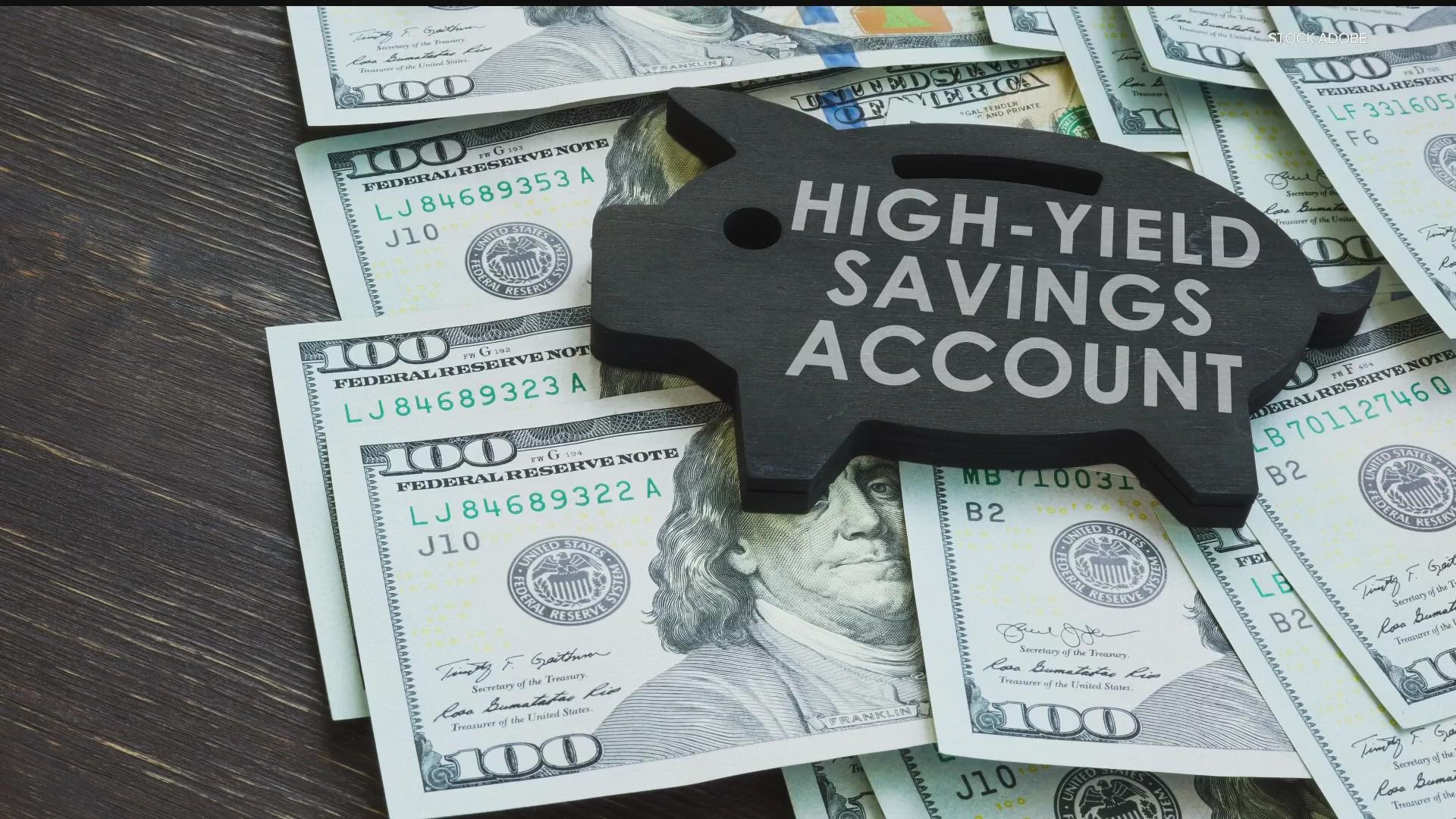
A high-yield savings account (HYSA) pays a meaningfully higher interest rate than a traditional bank savings account, usually because it's offered by an online-only bank with lower overhead. The APY matters, but so does whether the account has monthly fees, a minimum balance requirement, and how easily you can move money in and out when you actually need it.
1. Why Online Banks Can Pay More
Traditional banks spend heavily on physical branches, staff, and in-person service. Online-only banks skip most of that overhead, which lets them pass a larger share of what they earn on deposits back to customers as interest. That's the main reason HYSA rates can end up several times higher than what a big-name brick-and-mortar bank offers on its standard savings account.
The tradeoff is mostly about convenience: no teller windows, no in-person cash deposits, and customer service handled by phone, chat, or app instead of a branch visit.
2. What to Compare Beyond the Headline APY
| Factor | Why it matters |
|---|---|
| APY | The actual annual return on your balance, including compounding |
| Monthly fees | Can quietly erase the interest advantage on smaller balances |
| Minimum balance | Some accounts require a minimum to earn the advertised rate at all |
| Transfer speed | Matters most if the account doubles as part of an emergency fund |
| FDIC/deposit insurance | Confirms your balance is protected up to the legal limit if the bank fails |
*Rates and terms vary by bank and change over time; always confirm current numbers directly with the institution before opening an account.
3. Where an HYSA Fits in a Broader Savings Plan
A high-yield savings account is generally best suited for money you might need on short notice: an emergency fund, savings for a near-term goal, or cash you're not ready to put into the market. It's not designed to compete with long-term investing — interest rates move with broader economic conditions and aren't guaranteed to stay high indefinitely.
For money you won't touch for many years, historically the stock market has offered higher average returns than any savings account, though with more short-term volatility along the way.
4. Common Mistakes to Avoid
Chasing the single highest advertised rate without reading the fine print is the most common misstep — some of the highest rates only apply to a limited introductory period, or to balances under a certain threshold. It's also worth checking whether the bank is FDIC-insured (or NCUA-insured for credit unions), since that protection is what actually keeps your cash safe if the institution runs into trouble.
5. Frequently Asked Questions
Is my money safe in an online-only bank?
As long as the bank is FDIC-insured, your deposits are protected up to the legal limit, the same as at a traditional bank.
Can the interest rate change after I open the account?
Yes. Most HYSA rates are variable and move up or down along with broader interest rate conditions, unlike a fixed-rate CD.
How much should I keep in a savings account versus investing?
A common approach is keeping three to six months of essential expenses in savings for emergencies, with money beyond that considered for longer-term investing.